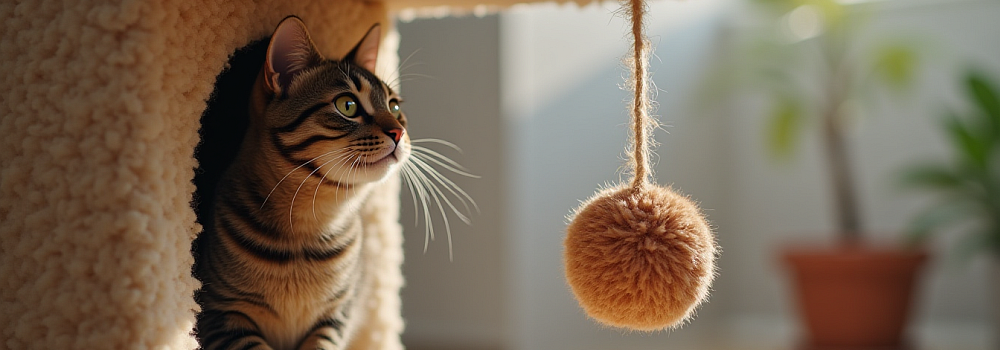
The Indoor Cat’s Guide to Living an Active, Happy Life
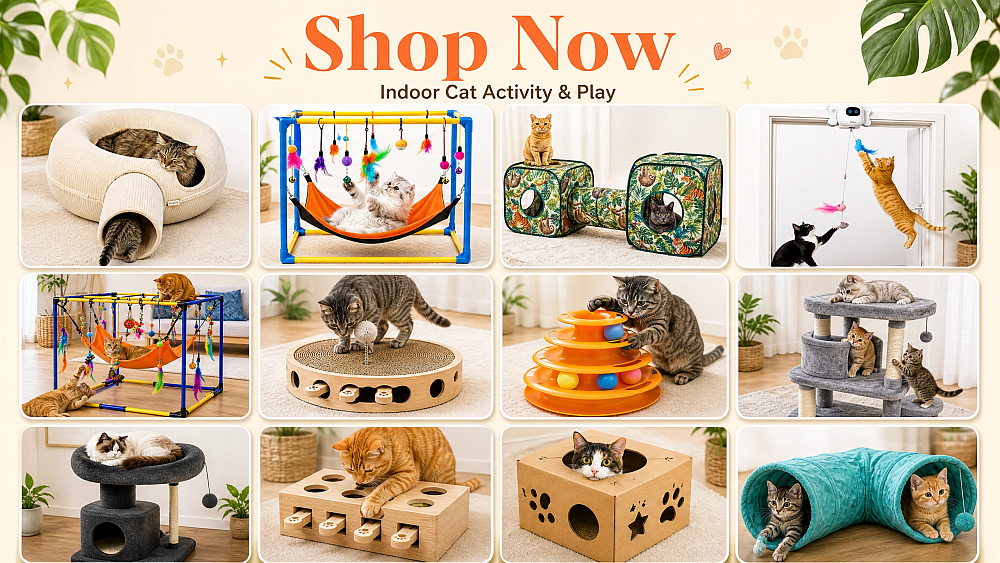
Shop Indoor Cat Activity Center Toys on Amazon
Why Cats Need Enrichment
Your cat’s ancestors didn’t receive breakfast in a bowl. Every meal required planning, stalking, chasing, climbing, and patience. Even though modern cats no longer need to hunt for survival, their instincts remain remarkably strong. Without appropriate outlets for these natural drives, many cats begin inventing their own “activities”—which may not always be appreciated by their owners!
Common signs of an under-stimulated cat include:
- Scratching furniture
- Climbing curtains
- Knocking objects off shelves
- Constant meowing
- Zooming through the house at night
- Chasing ankles
- Overeating
- Sleeping excessively
- Overgrooming
- Fighting with other household pets
These behaviors are often your cat’s way of saying:
“I need something meaningful to do.”
Let’s look at the natural behaviors cats were designed to perform and how we can recreate those experiences indoors.
Shop Indoor Cat Activity Center Toys on Amazon
1. Hunting: Every Cat Is Born a Predator
Perhaps no instinct is stronger than hunting. Even the friendliest lap cat still possesses the same hunting instincts as its wild ancestors. In nature, cats spend hours:
- Watching
- Waiting
- Stalking
- Pouncing
- Capturing prey
Indoor cats rarely get opportunities to complete this hunting sequence unless we provide them.
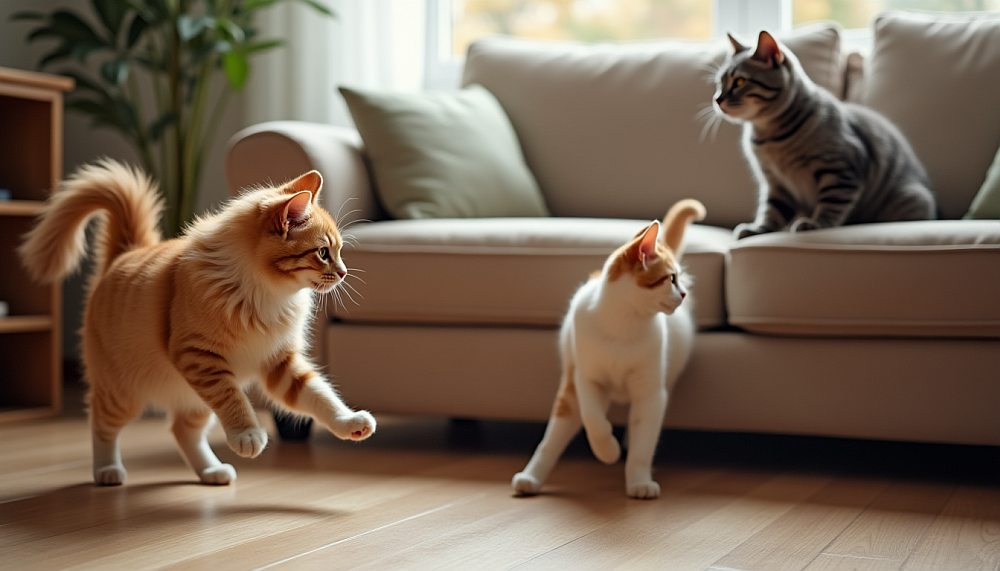
Indoor Hunting Alternatives
Excellent enrichment toys include:
- Feather wand toys
- Battery-operated moving mice
- Interactive rolling balls
- Motion-activated toys
- Cat tunnels
- Puzzle feeders
- Treat-dispensing toys
- Small plush mice
- Crinkle toys
Try ending each interactive play session by allowing your cat to “catch” the toy. Successfully capturing prey satisfies their natural hunting instinct and leaves them feeling rewarded.
Shop Saolife Interactive Toys on Amazon
2. Stalking Insects: Encouraging Focus and Patience
Cats are fascinated by movement.
A fluttering moth, crawling beetle, or buzzing fly can entertain a cat for surprisingly long periods.
These tiny hunting opportunities provide both mental stimulation and exercise.
Indoor Alternatives
Recreate this experience with:
- Electronic fluttering butterfly toys
- Feather teaser wands
- Robotic bugs
- Rolling electronic balls
- Laser pointer games (always finish with a toy they can catch)
- Battery-operated mice
- Automatic Interactive Cat Laser Toys
Changing the speed and direction of the toy mimics unpredictable prey movement and keeps your cat mentally engaged.
Shop Teddy Run Interactive Mouse Toy on Amazon
3. Climbing: Cats Love Vertical Territory
In nature, cats climb trees to:
- Escape danger
- Survey territory
- Rest safely
- Observe prey
Indoor cats still crave elevated spaces.
A cat that sits on top of your refrigerator isn’t trying to annoy you—they’re following thousands of years of instinct.
Indoor Climbing Alternatives
Provide vertical space with:
- Multi-level cat trees
- Wall-mounted climbing shelves
- Window perches
- Cat hammocks
- Tall scratching posts
- Cat towers with platforms
- Bookshelf pathways designed for cats
Vertical spaces increase your cat’s confidence while encouraging healthy exercise.
Shop Indoor Cat Trees on Amazon
4. Exploring New Territory
Cats are naturally curious. Every unfamiliar object presents an opportunity to investigate. New scents, textures, and environments stimulate the feline brain. Unfortunately, many indoor environments remain unchanged for months.
Indoor Exploration Ideas
Keep your home interesting by:
- Rotating toys weekly
- Moving cat furniture occasionally
- Creating cardboard box mazes
- Rearranging tunnels
- Introducing paper bags (without handles)
- Building obstacle courses
- Creating new window viewing areas
Even small changes can make familiar spaces feel exciting again.
5. Hiding: Every Cat Needs a Safe Retreat
Cats don’t hide because they’re antisocial. Hiding is a survival behavior. Even confident cats appreciate having secure places where they can:
- Relax
- Sleep
- Escape noise
- Observe quietly
- Recover from stress
Without safe hiding places, anxious cats may choose inaccessible locations behind furniture or under beds.
Shop Cardboard Cat Houses on Amazon
Indoor Hiding Alternatives
Consider providing:
- Cat cave beds
- Tunnel beds
- Covered cat houses
- Soft igloo beds
- Cardboard boxes
- Blanket forts
- Shelves with enclosed cubbies
Cats feel more secure when they know they always have somewhere safe to retreat.
6. Patrolling Their Territory
Wild cats constantly monitor their surroundings. They observe movement, scents, sounds, and potential intruders. Indoor cats enjoy doing exactly the same thing. That’s why many spend hours watching birds through windows.
Indoor Patrol Alternatives
Create observation stations with:
- Window hammocks
- Bird feeders outside windows
- Cat TV videos featuring birds and squirrels
- Tall cat trees near windows
- Elevated shelves overlooking the room
Provide multiple resting areas for your cats to hide throughout your home. Giving your cat several places to “supervise” the household satisfies their territorial instincts.
Shop Window Beds for Cats on Amazon
The Importance of Interactive Play
While toys are wonderful, nothing replaces spending time playing with your cat. Interactive play builds trust while satisfying natural hunting behaviors.
Aim for:
- Two or three sessions each day
- 10–15 minutes per session
- Toys that encourage chasing and pouncing
- A successful “catch” at the end
Many behavior problems improve simply by increasing daily interactive play.
Rotate Toys to Prevent Boredom
Imagine eating the same meal every day for years. That’s how many toys become for cats. Instead of leaving every toy out all the time:
- Store half of them away.
- Rotate toys weekly.
- Introduce one “new” toy every few days.
- Rearrange tunnels and climbing structures.
Old toys often become exciting again after a short break.
Mental Enrichment Is Just as Important
Physical exercise alone isn’t enough. Cats also enjoy solving problems. Excellent mental enrichment includes:
- Puzzle feeders
- Hidden treats
- Food-dispensing balls
- Scent games
- Clicker training
- Learning simple tricks
- Obstacle courses
Mental exercise often tires a cat just as effectively as physical activity.
Enrichment Helps Prevent Behavioral Problems
Many unwanted behaviors stem from boredom rather than disobedience.
Proper enrichment can reduce:
- Furniture scratching
- Excessive vocalization
- Destructive chewing
- Nighttime activity
- Attention-seeking behaviors
- Fighting between cats
- Weight gain
- Anxiety-related grooming
Meeting your cat’s natural needs often prevents these issues before they begin.
Build an Enrichment Routine
You don’t need to entertain your cat every hour of the day. Instead, create a predictable daily rhythm.
Here’s an example:
Morning
- Breakfast in a puzzle feeder
- Five to ten minutes of wand play
- Open the curtains for bird watching
Afternoon
- Access to a cat tunnel or climbing tree
- Rotate a toy or hide treats around the house
- Quiet nap time in a cat cave or cozy bed
Evening
- Interactive feather wand session
- Chasing toys through tunnels
- Short clicker training session
- Dinner followed by a relaxing grooming session
This variety keeps your cat mentally and physically engaged throughout the day.
Shop Interactive Cat Feather Wand Toys on Amazon
Final Thoughts
Indoor cats may live in the comfort and safety of our homes, but they still carry the instincts of skilled hunters, agile climbers, and curious explorers. Daily enrichment isn’t a luxury—it’s an essential part of responsible cat care.
By providing opportunities to hunt, climb, explore, hide, patrol, and solve problems, you’re helping your cat live a fuller, healthier, and happier life. Better still, an enriched cat is often more relaxed, more affectionate, and less likely to develop unwanted behaviors caused by boredom.
At Cats N Gadgets, we believe enrichment is one of the greatest gifts you can give your feline companion. That’s why we continually review toys, tunnels, climbing furniture, puzzle feeders, cat trees, window perches, and other products designed to stimulate your cat’s natural instincts.
Because when you enrich your cat’s world, you don’t just give them something to do—you give them the opportunity to truly thrive.
A busy cat is a happy cat, and a happy cat makes a happier home. 🐾